Source Colorful LED Glass Sand Timer for Decoration Gift Promotion
Find 30 listings for the Colorful LED Glass Sand Timer suitable for decoration, gifts, and promotional events. Buyers can compare specifications, materials, and pricing across suppliers offering custom options from China.
Key considerations
Products List


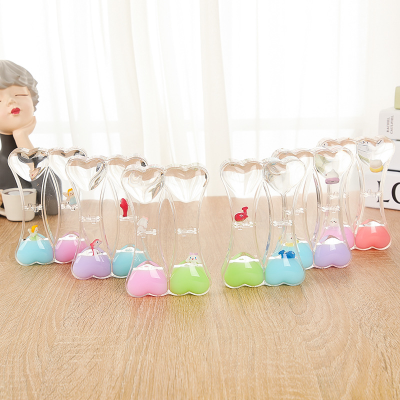
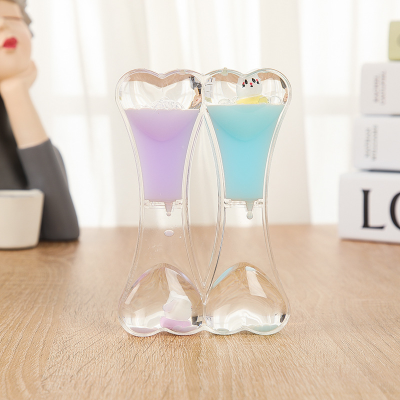
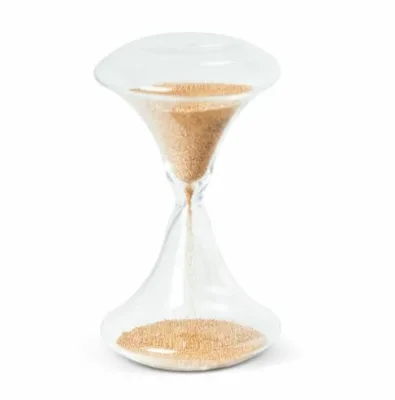
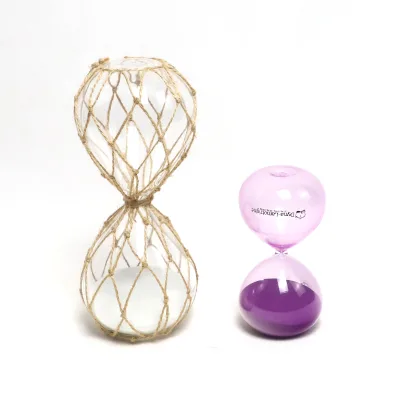
Promotional Custom Logo Colorful Sandglass Hourglass Sand Clock Timer/Hourglass Timer
$0.29 - $0.35
MOQ: 500 Pieces





Comprehensive Sourcing Guide
Strategic Sourcing Guide for Colorful LED Glass Sand Timers
Understanding Product Composition and Technical Specifications
When sourcing a Colorful LED Glass Sand Timer, buyers must first navigate the complex reality of material composition. The product category often blends traditional sand timers with modern electronic illumination, yet the available data reveals a significant divergence in material specifications. While the core keyword implies a glass construction, the observed product attributes list "Glass" as a material for certain models, while simultaneously identifying "Plastic," "Acrylonitrile Butadiene Styrene (ABS)," and "high quality plastic" for others. This indicates that the market for "glass sand timers" frequently includes plastic alternatives that mimic the aesthetic of glass or are marketed under the same broad category name.
The technical specifications for these devices vary widely depending on the specific model and intended use. For instance, specific models such as UC332, UC335, and UC337 are associated with ABS plastic construction, whereas other entries explicitly cite glass. The dimensions provided in the data suggest a range of sizes, with one specific model noted at 92.613.7cm and another at 1.6"D x 1.6"W x 3.7"H. Buyers must verify the exact material composition of the hourglass vessel before ordering, as this dictates the durability, weight, and safety profile of the product. The weight of a single unit can range significantly, with one observation noting an item weight of 490 grams and another listing a single gross weight of 1.0 kg.
The timing functionality is another critical technical parameter. The sand timing capabilities observed in the market include intervals of 1, 3, 5, 10, 15, and 30 minutes. This variability allows for diverse applications, from kitchen timers to meditation aids. The integration of LED lighting, implied by the keyword, adds a layer of complexity regarding power sources and battery life, which are not explicitly detailed in the provided attributes but are essential for functional verification. The color options available in the market are extensive, including Black, Purple, Green, Red, Yellow, and White, allowing for significant customization to match brand identities or specific event themes.
Compliance, Certification, and Safety Standards
Navigating the compliance landscape for LED-integrated glass or plastic sand timers requires rigorous verification. The provided data mentions "Eco-Friendly" and "Environment Friendly" as product features, suggesting that manufacturers may adhere to specific environmental standards regarding material sourcing and disposal. However, the text does not list specific certification bodies or standard numbers (such as CE, RoHS, or UL) that are universally applied to all units. Buyers must treat these feature labels as observations of specific product lines rather than guarantees of compliance for every item in the category.
When evaluating suppliers, it is imperative to request documentation for electrical safety, particularly because the product involves LED components and likely requires batteries or external power. The "prod_standard" attribute is listed as "customized" in some instances, which implies that the product may not always adhere to a rigid, pre-existing international standard but rather to a specification agreed upon between the buyer and the manufacturer. This customization capability is a double-edged sword; while it allows for tailored solutions, it shifts the burden of compliance verification entirely onto the buyer.
For products originating from China, as indicated by the "Made in China" and "Jiangsu, China" origin data, buyers should be aware of the varying levels of regulatory enforcement. The "standard" attribute being "customized" suggests that the product might be designed to meet specific market requirements rather than a universal baseline. Therefore, the procurement strategy must include a step where the buyer explicitly defines the required safety standards for the target market (e.g., FCC for the US, CE for Europe) and mandates that the supplier provides test reports confirming adherence to these specific standards before production begins. Relying on general "Eco-Friendly" claims without supporting test data is insufficient for B2B procurement of electronic-adjacent goods.
Cost Drivers and Pricing Dynamics
The pricing structure for colorful LED glass sand timers is influenced by several key factors, including material choice, customization level, and order volume. The observed price range in the market spans from $0.08 to $8.50 USD, a wide disparity that reflects the difference between basic plastic models and more complex glass or LED-integrated units. The lower end of this spectrum likely corresponds to simple plastic timers with minimal customization, while the higher end may encompass glass vessels, intricate LED circuitry, and premium packaging.
Material composition is a primary cost driver. Glass is generally more expensive to manufacture and ship than plastic or ABS due to fragility and weight. The data shows that while some models are made of glass, others utilize ABS or high-quality plastic, which are more cost-effective alternatives. The choice of material directly impacts the unit cost and the potential for damage during transit, which in turn affects the total landed cost.
Customization is another significant variable. The product attributes confirm that "Customization" and "Customized" options are available, and "OEM/ODM" is "Highly Welcomed." Customizing the color, shape, or LED pattern requires additional tooling and setup time, which increases the per-unit cost. The Minimum Order Quantity (MOQ) also plays a crucial role in pricing. The observed MOQ range is between 30 and 10,000 units. Suppliers often offer tiered pricing, where the unit cost decreases as the order volume increases. However, the high MOQ of 10,000 pieces for certain models may present a barrier for smaller buyers, necessitating a negotiation strategy that balances volume discounts with inventory risk.
Packaging is a hidden cost driver. The data lists various packaging types, including "Gift Box," "Carton," "1PC/Polybag," "Color Box," and "bubble bag + white box." The choice of packaging affects both the unit price and the shipping volume. Premium packaging like a "Gift Box" or "Color Box" adds to the cost but is essential for products intended as promotional gifts or high-end home decorations. Buyers must factor in the cost of the packaging material and the additional volume it adds to the shipment when calculating the total cost of ownership.
Typical Applications and Market Segmentation
The versatility of colorful LED glass sand timers allows them to serve a wide array of applications, from functional timekeeping to decorative accents. The "Usage" attributes in the data highlight "Decoration," "Gift," "Daily Use," and "Home Decoration," indicating a broad market appeal. The "Style" is described as "Creative," "Fashion," and "Art Deco," suggesting that these products are often positioned as lifestyle items rather than purely utilitarian tools.
In the promotional gift sector, these timers are highly effective. The "Promotional Gift" attribute explicitly links the product to marketing campaigns, while the "Market" is noted as "for Gift." The ability to customize colors and designs makes them ideal for corporate branding, where a company might order a specific color scheme to match their logo. The "occasion" attribute mentions "Thank you & Appreciation," further cementing their role in customer retention and employee recognition programs.
For the home and office market, the "Home Decoration" and "Daily Use" classifications suggest that these timers are used as aesthetic pieces on desks, shelves, or tables. The "Art Deco" style and "Creative" design elements appeal to consumers looking to add a unique touch to their interior design. The LED feature adds a modern, ambient lighting element that can enhance the atmosphere of a room, making it suitable for meditation spaces, yoga studios, or modern living areas.
The "Kids Timer Clock" attribute points to a specific niche in the educational and parenting market. Parents and educators often use sand timers to help children manage time for homework, chores, or play. The colorful and creative nature of these timers makes them engaging for children, while the LED feature can add an element of fun. The "Gift Box" packaging further supports their use as presents for children or teachers.
Supplier Evaluation and Sourcing Strategy
Selecting the right supplier for colorful LED glass sand timers requires a thorough evaluation of their capabilities, particularly regarding customization and quality control. The data indicates that suppliers offer "Customization" and "OEM/ODM" services, which means they can adapt the product to specific buyer requirements. However, the "prod_standard" being "customized" suggests that buyers must be proactive in defining their specifications.
When evaluating suppliers, buyers should verify the "place of origin," which is listed as "China" and specifically "Jiangsu, China." This region is known for its manufacturing capabilities, but buyers should still conduct due diligence to ensure the supplier has a track record of producing high-quality electronic-adjacent goods. The "Sample time" of 7-10 days is a critical metric for the procurement timeline. Buyers should confirm if this timeframe is consistent across different suppliers and whether expedited sampling is available.
The "Delivery time" of 30 days is another key factor to consider. This lead time includes production and shipping, and buyers must ensure it aligns with their project deadlines. Suppliers with a "High MOQ" of 10,000 pieces may have longer lead times or less flexibility for smaller orders. Buyers should also check the "Single package size" and "Single gross weight" to calculate shipping costs accurately. The data shows a single package size of 13X13X4 cm and a gross weight of 1.0 kg, which are useful for logistics planning.
Buyers should also assess the supplier's ability to handle the "Color" variations listed, such as Black, Purple, Green, Red, Yellow, and White. A supplier with a robust color-matching process will ensure consistency across large orders. Additionally, the "Feature" of being "Eco-Friendly" or "Environment Friendly" should be verified through documentation, as this is a growing demand in the B2B market.
Quality Control and Long-Term Procurement Considerations
Maintaining high quality standards for colorful LED glass sand timers is essential for long-term procurement success. The "Item Weight" of 490 grams and the "Single gross weight" of 1.0 kg indicate that the product has a substantial build, but the fragility of glass components requires careful handling. Quality control processes should include visual inspections for cracks, scratches, and color consistency, as well as functional tests for the LED illumination and sand flow.
For long-term procurement, buyers should establish a clear quality agreement with the supplier. This agreement should specify the acceptable defect rate, the testing methods to be used, and the consequences of non-compliance. The "prod_packing" attributes, such as "Gift Box," "Carton," and "bubble bag + white box," highlight the importance of protective packaging. Buyers should ensure that the packaging is robust enough to prevent damage during transit, especially for glass models.
The "Customized" nature of the product means that quality control must be tailored to the specific design. For example, if a buyer orders a custom color, the supplier must demonstrate the ability to match the color precisely. If the product includes an LED, the supplier must guarantee the longevity of the light source and the reliability of the battery compartment.
Long-term relationships with suppliers can be built on consistent quality and reliable delivery. The "Delivery time" of 30 days and "Sample time" of 7-10 days provide a baseline for planning, but buyers should aim for suppliers who can offer more flexible timelines for urgent orders. The "OEM/ODM" capability suggests that suppliers are willing to collaborate on product development, which can lead to innovative solutions and a competitive advantage in the market.
In conclusion, sourcing colorful LED glass sand timers requires a balanced approach that considers material composition, compliance, cost, applications, supplier capabilities, and quality control. By leveraging the available data and conducting thorough due diligence, buyers can secure high-quality products that meet their specific needs and market demands. The wide range of options, from plastic to glass, and the extensive customization capabilities, make this product category a versatile choice for various B2B applications.
FAQs
What materials are used for colorful LED glass sand timers?
These timers are constructed from glass, plastic, or Acrylonitrile Butadiene Styrene. While some models feature glass vessels, others utilize high-quality plastic or ABS to mimic the aesthetic while offering greater durability and cost efficiency for bulk orders.
Can I customize the sand timing intervals for these timers?
Yes, customization is available for sand timing intervals ranging from 1 to 30 minutes. Buyers can select specific durations such as 1, 3, 5, 10, 15, or 30 minutes to suit various applications like kitchen tasks, meditation, or educational activities for children.
Which packaging options are available for these promotional gifts?
Packaging varies by model and includes Gift Boxes, Cartons, Color Boxes, or Polybags with white boxes. The choice of packaging depends on the intended use, with premium options like Gift Boxes suitable for corporate appreciation events and simple Polybags for basic distribution.
How long is the delivery time for bulk orders of these timers?
The standard delivery time for production and shipping is approximately 30 days. Buyers should also note that sample preparation typically requires 7 to 10 days, and lead times may vary based on the specific MOQ and customization requirements agreed upon with the supplier.
What is the minimum order quantity for these sand timers?
The minimum order quantity ranges from 30 to 10,000 pieces depending on the specific model and supplier. Some models require a high MOQ of 1,000 or 10,000 units, while others may accommodate smaller orders starting at 30 pieces for testing or small-scale distribution.
Where are these colorful sand timers manufactured?
These products originate from China, with specific manufacturing hubs located in Jiangsu. Buyers should verify the exact place of origin for their selected model, as this impacts logistics planning and potential compliance requirements for international shipping and import regulations.